Great text by Seth Klarmann. A smaller, more concise edition of "Margin Of Safety" in the begginings of the financial crisis.
Link
Mostrar mensagens com a etiqueta Articles. Mostrar todas as mensagens
Mostrar mensagens com a etiqueta Articles. Mostrar todas as mensagens
segunda-feira, outubro 22, 2012


sexta-feira, fevereiro 10, 2012
quinta-feira, janeiro 19, 2012
segunda-feira, janeiro 09, 2012
segunda-feira, março 28, 2011
Seth Klarman - A Framework for Investment Success
Seth Klarman had a section in his annual letter to investors on creating a framework for investment success.
I think Klarman's writings may be even more valuable to investors as a learning tool than the Berkshire annual letters. Although obviously brilliant, both Klarman and Buffett can explain in very simple terms how to create an investment approach that will outperform.
Here is Klarman this year:
Two elements are vital in designing an investment approach for long-term success. First, answer the question, ''What's your edge?" In highly competitive financial markets, with thousands of very smart, hardworking participants, what will enable you to reliably outperform the field? Your toolkit is critically important: truly long-term capital; a flexible approach that enables you to move opportunistically across a broad array of markets, securities, and asset classes; deep industry knowledge; strong sourcing relationships; and a solid grounding in value investing principles.
But because investing is, in many ways, a zero-sum activity in which your returns above the market indices are derived from the mistakes, overreactions or inattention of others as much as from your own clever insights, there is a second element in designing a sound investment approach: You must consider the competitive landscape and the behavior of other market participants. As in football, you are well-advised to take advantage of what your opponents give you: If they are defending the run, passing is probably your best option, even if you have a star running back. If scores of other investors are rigidly committed to fast-growing technology stocks, your brilliant tech analyst may not be able to help you outperform. If your competitors are not paying attention to, or indeed are dumping, Greek equities or U.S. housing debt, these asset classes may be worth your attention, regardless of the currently poor fundamentals that are driving others' decisions. Where to best apply your focus and skills depends partially on where others are applying theirs.
When observing your competitors, your focus should be on their approach and process, not their results. Short-term performance envy causes many of the shortcomings that lock most investors into a perpetual cycle of underachievement. You should watch your competitors not out of jealousy, but out of respect, and focus your efforts not on replicating others' portfolios, but on looking for opportunities where they are not.
Much of the investment business is centered around asset-gathering activities. In a field dominated by a short-term, relative performance orientation, significant underperformance is disastrous for retention of assets, while mediocre performance is not. Thus, because protracted periods of underperformance can threaten one's business, most investment firms aim for assured, trend-following mediocrity while shunning the potential achievement of strong outperformance. The only way for investors to significantly outperform is to periodically stand far apart from the crowd, something few are willing or able to do.
In addition, most traditional investors are limited by a variety of constraints: narrow skill-sets, legal restrictions contained in investment prospectuses or partnership agreements, or psychological inhibitions. High-grade bond funds can only purchase investment-grade bonds; when a bond falls below BBB, they are typically forced to sell (or think that they should), regardless of price. When a mortgage security is downgraded because it will not return par to its holders, a large swath of potential purchasers will not even consider buying it, and many must purge it. When a company omits a cash dividend, some equity funds are obliged to sell that stock. And, of course, when a stock is deleted from an index, it must immediately be dumped by many.
Sometimes, a drop in a stock's price is reason enough for some holders to sell. Such behavior often creates supply-demand imbalances where bargains can be found. The dimly lit comers and crevasses existing outside of mainstream mandates may contain opportunity. Given that time is often an investor's scarcest resource, filling one’s in-box with the most compelling potential opportunities that others are forced to or choose to sell (or are constrained from buying) makes great sense.
Price is perhaps the single most important criterion in sound investment decision making. Every security or asset is a "buy" at one price, a “hold” at a higher price, and a "sell" at some still higher price. Yet most investors in all asset classes love simplicity, rosy outlooks and the prospect of smooth sailing. They prefer what is performing well to what has recently lagged, often regardless of price. They prefer full buildings and trophy properties to fixer-uppers that need to be filled, even though empty or unloved buildings may be the far more compelling, and even safer, investments. Because investors are not usually penalized for adhering to conventional practices, doing so is the less professionally risky strategy, even though it virtually guarantees against superior performance.
Finally, most investors feel compelled to be fully invested at all times—principally because evaluation of their performance is both frequent and relative. For them, it is almost as if investing were merely a game and no client's hard-earned money was at risk. To require full investment all the time is to remove an important tool from investors' toolkits: the ability to wait patiently for compelling opportunities that may arise in the future. Moreover, an investor who is too worried about missing out on the upside of a potential investment may be exposing himself to substantial downside risk precisely when valuation is extended. A thoughtful investment approach focuses at least as much on risk as on return. But in the moment-by-moment frenzy of the markets, all the pressure is on generating returns, risk be damned.
What drives long-term investment success? In the Internet era, everyone has a voluminous amount of information, but not everyone knows how to use it. A well-considered investment process— thoughtful, intellectually honest, teamoriented, and single-mindedly focused on making good investment decisions at every turn—can make all of the difference. Investors with short-time horizons are oblivious to kernels of information that may influence investment outcomes years from now. Everyone can ask questions, but not everyone can identify the right questions to ask. Everyone searches for opportunity, but most look only where the searching is straightforward even if undeniably highly competitive.
In the markets of late 2008, everything was for sale as investors were caught in a contagion of selling due to panic, margin calls, and investor redemptions. Even while modeling very conservative scenarios, many securities could have been purchased at extremely attractive prices—if one had capital with which to buy them and the stamina to hold them in the face of falling prices. By late 2010, froth had returned to the markets, as investors with short-term relative performance orientations sought to keep up with the herd. Exuberant buying had replaced frenzied selling, as investors purchased securities offering limited returns even on far rosier economic assumptions.
Most investors take comfort from calm, steadily rising markets; roiling markets can drive investor panic. But these conventional reactions are inverted. When all feels calm and prices surge, the markets may feel safe; but, in fact, they are dangerous because few investors are focusing on risk. When one feels in the pit of one's stomach the fear that accompanies plunging market prices, risk-taking becomes considerably less risky, because risk is often priced into an asset's lower market valuation. Investment success requires standing apart from the frenzy—the short-term, relative performance game played by most investors.
Investment success also requires remembering that securities prices are not blips on a Bloomberg terminal but are fractional interests in—or claims on—companies. Business fundamentals, not price quotations, convey useful information. With so many market participants fixated on short-term investment performance, successful investing requires a focus not on how one is doing, but on corporate balance sheets and income and cash flow statements.
I think Klarman's writings may be even more valuable to investors as a learning tool than the Berkshire annual letters. Although obviously brilliant, both Klarman and Buffett can explain in very simple terms how to create an investment approach that will outperform.
Here is Klarman this year:
Two elements are vital in designing an investment approach for long-term success. First, answer the question, ''What's your edge?" In highly competitive financial markets, with thousands of very smart, hardworking participants, what will enable you to reliably outperform the field? Your toolkit is critically important: truly long-term capital; a flexible approach that enables you to move opportunistically across a broad array of markets, securities, and asset classes; deep industry knowledge; strong sourcing relationships; and a solid grounding in value investing principles.
But because investing is, in many ways, a zero-sum activity in which your returns above the market indices are derived from the mistakes, overreactions or inattention of others as much as from your own clever insights, there is a second element in designing a sound investment approach: You must consider the competitive landscape and the behavior of other market participants. As in football, you are well-advised to take advantage of what your opponents give you: If they are defending the run, passing is probably your best option, even if you have a star running back. If scores of other investors are rigidly committed to fast-growing technology stocks, your brilliant tech analyst may not be able to help you outperform. If your competitors are not paying attention to, or indeed are dumping, Greek equities or U.S. housing debt, these asset classes may be worth your attention, regardless of the currently poor fundamentals that are driving others' decisions. Where to best apply your focus and skills depends partially on where others are applying theirs.
When observing your competitors, your focus should be on their approach and process, not their results. Short-term performance envy causes many of the shortcomings that lock most investors into a perpetual cycle of underachievement. You should watch your competitors not out of jealousy, but out of respect, and focus your efforts not on replicating others' portfolios, but on looking for opportunities where they are not.
Much of the investment business is centered around asset-gathering activities. In a field dominated by a short-term, relative performance orientation, significant underperformance is disastrous for retention of assets, while mediocre performance is not. Thus, because protracted periods of underperformance can threaten one's business, most investment firms aim for assured, trend-following mediocrity while shunning the potential achievement of strong outperformance. The only way for investors to significantly outperform is to periodically stand far apart from the crowd, something few are willing or able to do.
In addition, most traditional investors are limited by a variety of constraints: narrow skill-sets, legal restrictions contained in investment prospectuses or partnership agreements, or psychological inhibitions. High-grade bond funds can only purchase investment-grade bonds; when a bond falls below BBB, they are typically forced to sell (or think that they should), regardless of price. When a mortgage security is downgraded because it will not return par to its holders, a large swath of potential purchasers will not even consider buying it, and many must purge it. When a company omits a cash dividend, some equity funds are obliged to sell that stock. And, of course, when a stock is deleted from an index, it must immediately be dumped by many.
Sometimes, a drop in a stock's price is reason enough for some holders to sell. Such behavior often creates supply-demand imbalances where bargains can be found. The dimly lit comers and crevasses existing outside of mainstream mandates may contain opportunity. Given that time is often an investor's scarcest resource, filling one’s in-box with the most compelling potential opportunities that others are forced to or choose to sell (or are constrained from buying) makes great sense.
Price is perhaps the single most important criterion in sound investment decision making. Every security or asset is a "buy" at one price, a “hold” at a higher price, and a "sell" at some still higher price. Yet most investors in all asset classes love simplicity, rosy outlooks and the prospect of smooth sailing. They prefer what is performing well to what has recently lagged, often regardless of price. They prefer full buildings and trophy properties to fixer-uppers that need to be filled, even though empty or unloved buildings may be the far more compelling, and even safer, investments. Because investors are not usually penalized for adhering to conventional practices, doing so is the less professionally risky strategy, even though it virtually guarantees against superior performance.
Finally, most investors feel compelled to be fully invested at all times—principally because evaluation of their performance is both frequent and relative. For them, it is almost as if investing were merely a game and no client's hard-earned money was at risk. To require full investment all the time is to remove an important tool from investors' toolkits: the ability to wait patiently for compelling opportunities that may arise in the future. Moreover, an investor who is too worried about missing out on the upside of a potential investment may be exposing himself to substantial downside risk precisely when valuation is extended. A thoughtful investment approach focuses at least as much on risk as on return. But in the moment-by-moment frenzy of the markets, all the pressure is on generating returns, risk be damned.
What drives long-term investment success? In the Internet era, everyone has a voluminous amount of information, but not everyone knows how to use it. A well-considered investment process— thoughtful, intellectually honest, teamoriented, and single-mindedly focused on making good investment decisions at every turn—can make all of the difference. Investors with short-time horizons are oblivious to kernels of information that may influence investment outcomes years from now. Everyone can ask questions, but not everyone can identify the right questions to ask. Everyone searches for opportunity, but most look only where the searching is straightforward even if undeniably highly competitive.
In the markets of late 2008, everything was for sale as investors were caught in a contagion of selling due to panic, margin calls, and investor redemptions. Even while modeling very conservative scenarios, many securities could have been purchased at extremely attractive prices—if one had capital with which to buy them and the stamina to hold them in the face of falling prices. By late 2010, froth had returned to the markets, as investors with short-term relative performance orientations sought to keep up with the herd. Exuberant buying had replaced frenzied selling, as investors purchased securities offering limited returns even on far rosier economic assumptions.
Most investors take comfort from calm, steadily rising markets; roiling markets can drive investor panic. But these conventional reactions are inverted. When all feels calm and prices surge, the markets may feel safe; but, in fact, they are dangerous because few investors are focusing on risk. When one feels in the pit of one's stomach the fear that accompanies plunging market prices, risk-taking becomes considerably less risky, because risk is often priced into an asset's lower market valuation. Investment success requires standing apart from the frenzy—the short-term, relative performance game played by most investors.
Investment success also requires remembering that securities prices are not blips on a Bloomberg terminal but are fractional interests in—or claims on—companies. Business fundamentals, not price quotations, convey useful information. With so many market participants fixated on short-term investment performance, successful investing requires a focus not on how one is doing, but on corporate balance sheets and income and cash flow statements.
quinta-feira, janeiro 13, 2011
segunda-feira, setembro 13, 2010
Entrevista Seth Klarman
Excelente entrevista de Seth Klarman, autor do livro "Margin of Safety", a Jason Zweig.
Link para o artigo.
Link para o artigo.
quarta-feira, junho 09, 2010
terça-feira, março 23, 2010
Confessions of a Value Investor - A Few Lessons in Behavioral Finance By Sanjay Bakshi
Uma excelente apresentação sobre Behavioral Finance, um ramo da economia que vem ganhando cada vez maior destaque, e que neste caso específico em que se debruça sobre o campo do investimento, procura demonstrar que o típico investidor é um ser não muito racional mas muito mais racionalizante, colocando em causa a teoria dos mercados eficientes e os seus pressupostos. Sem dúvida um tema muito relevante para a estratégia de qualquer investidor em valor.
Apresentação
Apresentação
sexta-feira, março 05, 2010
Carta Anual de Warren Buffett aos Accionistas
Todos os anos Warren Buffett publica a sua tão aguardada carta aos accionistas da Berkshire Hathaway onde faz considerações sobre os negócios da sua empresa, sobre a sua filosofia de investimento, sobre a economia em geral e sobre a sociedade e a política do seu país e do mundo. A não perder.
Link
Para quem procura cartas de anos anteriores pode encontrá-las também no site da Berkshire Hathaway, aqui.
Link
Para quem procura cartas de anos anteriores pode encontrá-las também no site da Berkshire Hathaway, aqui.
quarta-feira, abril 15, 2009
What Has Worked In Investing?
Excelente documento da firma gestão de activos Tweedy Brown, investidores em valor. Nele são compiladas uma série de estudos sobre várias estratégias de investimento em valor com resultados excelentes.
What Has Worked In Investing?
What Has Worked In Investing?
terça-feira, janeiro 15, 2008
terça-feira, janeiro 08, 2008
quinta-feira, dezembro 27, 2007
quinta-feira, setembro 13, 2007
Sátira Contabilística de Ben Graham - 1936
U. S. STEEL ANNOUNCES SWEEPING MODERNIZATION SCHEME*
* An unpublished satire by Ben Graham, written in 1936 and given by the author to Warren Buffett in 1954 - In 1990 Letter to Berkshire Hathaway Shareholders, Appendix A.
Myron C. Taylor, Chairman of U. S. Steel Corporation, today announced the long awaited plan for completely modernizing the world's largest industrial enterprise. Contrary to expectations, no changes will be made in the company's manufacturing or selling policies. Instead, the bookkeeping system is to be entirely revamped. By adopting and further improving a number of modern accounting and financial devices the corporation's earning power will be amazingly transformed. Even under the subnormal conditions of 1935, it is estimated that the new bookkeeping methods would have yielded a reported profit of close to $50 per share on the common stock. The scheme of improvement is the result of a comprehensive survey made by Messrs. Price, Bacon, Guthrie & Colpitts; it includes the following six points:
1. Writing down of Plant Account to Minus $1,000,000,000.
2. Par value of common stock to be reduced to 1¢.
3. Payment of all wages and salaries in option warrants.
4. Inventories to be carried at $1.
5. Preferred Stock to be replaced by non-interest bearing bonds redeemable at 50% discount.
6. A $1,000,000,000 Contingency Reserve to be established.
The official statement of this extraordinary Modernization Plan follows in full:
The Board of Directors of U. S. Steel Corporation is pleased to announce that after intensive study of the problems arising from changed conditions in the industry, it has approved a comprehensive plan for remodeling the Corporation's accounting methods. A survey by a Special Committee, aided and abetted by Messrs. Price, Bacon, Guthrie & Colpitts, revealed that our company has lagged somewhat behind other American business enterprises in utilizing certain advanced bookkeeping methods, by means of which the earning power may be phenomenally enhanced without requiring any cash outlay or any changes in operating or sales conditions. It has been decided not only to adopt these newer methods, but to develop them to a still higher stage of perfection. The changes adopted by the Board may be summarized under six heads, as follows:
1. Fixed Assets to be written down to Minus $1,000,000,000.
Many representative companies have relieved their income accounts of all charges for depreciation by writing down their plant account to $1. The Special Committee points out that if their plants are worth only $1, the fixed assets of U. S. Steel Corporation are worth a good deal less than that sum. It is now a well-recognized fact that many plants are in reality a liability rather than an asset, entailing not only depreciation charges, but taxes, maintenance, and other expenditures. Accordingly, the Board has decided to extend the write-down policy initiated in the 1935 report, and to mark down the Fixed Assets from $1,338,522,858.96 to a round Minus $1,000,000,000.
The advantages of this move should be evident. As the plant wears out, the liability becomes correspondingly reduced. Hence, instead of the present depreciation charge of some $47,000,000 yearly there will be an annual appreciation credit of 5%, or $50,000,000. This will increase earnings by no less than $97,000,000 per annum.
2. Reduction of Par Value of Common Stock to 1¢, and
3. Payment of Salaries and Wages in Option Warrants.
Many corporations have been able to reduce their overhead expenses substantially by paying a large part of their executive salaries in the form of options to buy stock, which carry no charge against earnings. The full possibilities of this modern device have apparently not been adequately realized. The Board of Directors has adopted the following advanced form of this idea:
The entire personnel of the Corporation are to receive their compensation in the form of rights to buy common stock at $50 per share, at the rate of one purchase right for each $50 of salary and/or wages in their present amounts. The par value of the common stock is to be reduced to 1¢.
The almost incredible advantages of this new plan are evident from the following:
A. The payroll of the Corporation will be entirely eliminated, a saving of $250,000,000 per annum, based on 1935 operations.
B. At the same time, the effective compensation of all our employees will be increased severalfold. Because of the large earnings per share to be shown on our common stock under the new methods, it is certain that the shares will command a price in the market far above the option level of $50 per share, making the readily realizable value of these option warrants greatly in excess of the present cash wages that they will replace.
C. The Corporation will realize an additional large annual profit through the exercise of these warrants. Since the par value of the common stock will be fixed at 1¢, there will be a gain of $49.99 on each share subscribed for. In the interest of conservative accounting, however, this profit will not be included in the income account, but will be shown separately as a credit to Capital Surplus.
D. The Corporation's cash position will be enormously strengthened. In place of the present annual cash outgo of $250,000,000 for wages (1935 basis), there will be annual cash inflow of $250,000,000 through exercise of the subscription warrants for 5,000,000 shares of common stock. The Company's large earnings and strong cash position will permit the payment of a liberal dividend which, in turn, will result in the exercise of these option warrants immediately after issuance which, in turn, will further improve the cash position which, in turn, will permit a higher dividend rate -- and so on, indefinitely.
4. Inventories to be carried at $1.
Serious losses have been taken during the depression due to the necessity of adjusting inventory value to market. Various enterprises -- notably in the metal and cotton-textile fields -- have successfully dealt with this problem by carrying all or part of their inventories at extremely low unit prices. The U. S. Steel Corporation has decided to adopt a still more progressive policy, and to carry its entire inventory at $1. This will be effected by an appropriate write-down at the end of each year, the amount of said write-down to be charged to the Contingency Reserve hereinafter referred to.
The benefits to be derived from this new method are very great. Not only will it obviate all possibility of inventory depreciation, but it will substantially enhance the annual earnings of the Corporation. The inventory on hand at the beginning of the year, valued at $1, will be sold during the year at an excellent profit. It is estimated that our income will be increased by means of this method to the extent of at least $150,000,000 per annum which, by a coincidence, will about equal the amount of the write-down to be made each year against Contingency Reserve.
A minority report of the Special Committee recommends that Accounts Receivable and Cash also be written down to $1, in the interest of consistency and to gain additional advantages similar to those just discussed. This proposal has been rejected for the time being because our auditors still require that any recoveries of receivables and cash so charged off be credited to surplus instead of to the year's income. It is expected, however, that this auditing rule -- which is rather reminiscent of the horse-and-buggy days -- will soon be changed in line with modern tendencies. Should this occur, the minority report will be given further and favorable consideration.
5. Replacement of Preferred Stock by Non-Interest-Bearing Bonds Redeemable at 50% Discount.
During the recent depression many companies have been able to offset their operating losses by including in income profits arising from repurchases of their own bonds at a substantial discount from par. Unfortunately the credit of U. S. Steel Corporation has always stood so high that this lucrative source of revenue has not hitherto been available to it. The Modernization Scheme will remedy this condition.
It is proposed that each share of preferred stock be exchanged for $300 face value of non-interest-bearing sinking-fund notes, redeemable by lot at 50% of face value in 10 equal annual installments. This will require the issuance of $1,080,000,000 of new notes, of which $108,000,000 will be retired each year at a cost to the Corporation of only $54,000,000, thus creating an annual profit of the same amount.
Like the wage-and/or-salary plan described under 3. above, this arrangement will benefit both the Corporation and its preferred stockholders. The latter are assured payment for their present shares at 150% of par value over an average period of five years. Since short-term securities yield practically no return at present, the non-interest-bearing feature is of no real importance. The Corporation will convert its present annual charge of $25,000,000 for preferred dividends into an annual bond-retirement profit of $54,000,000 -- an aggregate yearly gain of $79,000,000.
6. Establishment of a Contingency Reserve of $1,000,000,000.
The Directors are confident that the improvements hereinbefore described will assure the Corporation of a satisfactory earning power under all conditions in the future. Under modern accounting methods, however, it is unnecessary to incur the slightest risk of loss through adverse business developments of any sort, since all these may be provided for in advance by means of a Contingency Reserve.
The Special Committee has recommended that the Corporation create such a Contingency Reserve in the fairly substantial amount of $1,000,000,000. As previously set forth, the annual write-down of inventory to $1 will be absorbed by this reserve. To prevent eventual exhaustion of the Contingency Reserve, it has been further decided that it be replenished each year by transfer of an appropriate sum from Capital Surplus. Since the latter is expected to increase each year by not less than $250,000,000 through the exercise of the Stock Option Warrants (see 3. above), it will readily make good any drains on the Contingency Reserve.
In setting up this arrangement, the Board of Directors must confess regretfully that they have been unable to improve upon the devices already employed by important corporations in transferring large sums between Capital, Capital Surplus, Contingency Reserves and other Balance Sheet Accounts. In fact, it must be admitted that our entries will be somewhat too simple, and will lack that element of extreme mystification that characterizes the most advanced procedure in this field. The Board of Directors, however, have insisted upon clarity and simplicity in framing their Modernization Plan, even at the sacrifice of possible advantage to the Corporation's earning power.
In order to show the combined effect of the new proposals upon the Corporation's earning power, we submit herewith a condensed Income Account for 1935 on two bases, viz:

In accordance with a somewhat antiquated custom there is appended herewith a condensed pro-forma Balance Sheet of the U. S. Steel Corporation as of December 31, 1935, after giving effect to proposed changes in asset and liability accounts.

*Given a Stated Value differing from Par Value, in accordance with the laws of the State of Virginia, where the company will be re-incorporated.
It is perhaps unnecessary to point out to our stockholders that modern accounting methods give rise to balance sheets differing somewhat in appearance from those of a less advanced period. In view of the very large earning power that will result from these changes in the Corporation's Balance Sheet, it is not expected that undue attention will be paid to the details of assets and liabilities.
In conclusion, the Board desires to point out that the combined procedure, whereby plant will be carried at a minus figure, our wage bill will be eliminated, and inventory will stand on our books at virtually nothing, will give U. S. Steel Corporation an enormous competitive advantage in the industry. We shall be able to sell our products at exceedingly low prices and still show a handsome margin of profit. It is the considered view of the Board of Directors that under the Modernization Scheme we shall be able to undersell all competitors to such a point that the anti-trust laws will constitute the only barrier to 100% domination of the industry.
In making this statement, the Board is not unmindful of the possibility that some of our competitors may seek to offset our new advantages by adopting similar accounting improvements. We are confident, however, that U. S. Steel will be able to retain the loyalty of its customers, old and new, through the unique prestige that will accrue to it as the originator and pioneer in these new fields of service to the user of steel. Should necessity arise, moreover, we believe we shall be able to maintain our deserved superiority by introducing still more advanced bookkeeping methods, which are even now under development in our Experimental Accounting Laboratory.
* An unpublished satire by Ben Graham, written in 1936 and given by the author to Warren Buffett in 1954 - In 1990 Letter to Berkshire Hathaway Shareholders, Appendix A.
Myron C. Taylor, Chairman of U. S. Steel Corporation, today announced the long awaited plan for completely modernizing the world's largest industrial enterprise. Contrary to expectations, no changes will be made in the company's manufacturing or selling policies. Instead, the bookkeeping system is to be entirely revamped. By adopting and further improving a number of modern accounting and financial devices the corporation's earning power will be amazingly transformed. Even under the subnormal conditions of 1935, it is estimated that the new bookkeeping methods would have yielded a reported profit of close to $50 per share on the common stock. The scheme of improvement is the result of a comprehensive survey made by Messrs. Price, Bacon, Guthrie & Colpitts; it includes the following six points:
1. Writing down of Plant Account to Minus $1,000,000,000.
2. Par value of common stock to be reduced to 1¢.
3. Payment of all wages and salaries in option warrants.
4. Inventories to be carried at $1.
5. Preferred Stock to be replaced by non-interest bearing bonds redeemable at 50% discount.
6. A $1,000,000,000 Contingency Reserve to be established.
The official statement of this extraordinary Modernization Plan follows in full:
The Board of Directors of U. S. Steel Corporation is pleased to announce that after intensive study of the problems arising from changed conditions in the industry, it has approved a comprehensive plan for remodeling the Corporation's accounting methods. A survey by a Special Committee, aided and abetted by Messrs. Price, Bacon, Guthrie & Colpitts, revealed that our company has lagged somewhat behind other American business enterprises in utilizing certain advanced bookkeeping methods, by means of which the earning power may be phenomenally enhanced without requiring any cash outlay or any changes in operating or sales conditions. It has been decided not only to adopt these newer methods, but to develop them to a still higher stage of perfection. The changes adopted by the Board may be summarized under six heads, as follows:
1. Fixed Assets to be written down to Minus $1,000,000,000.
Many representative companies have relieved their income accounts of all charges for depreciation by writing down their plant account to $1. The Special Committee points out that if their plants are worth only $1, the fixed assets of U. S. Steel Corporation are worth a good deal less than that sum. It is now a well-recognized fact that many plants are in reality a liability rather than an asset, entailing not only depreciation charges, but taxes, maintenance, and other expenditures. Accordingly, the Board has decided to extend the write-down policy initiated in the 1935 report, and to mark down the Fixed Assets from $1,338,522,858.96 to a round Minus $1,000,000,000.
The advantages of this move should be evident. As the plant wears out, the liability becomes correspondingly reduced. Hence, instead of the present depreciation charge of some $47,000,000 yearly there will be an annual appreciation credit of 5%, or $50,000,000. This will increase earnings by no less than $97,000,000 per annum.
2. Reduction of Par Value of Common Stock to 1¢, and
3. Payment of Salaries and Wages in Option Warrants.
Many corporations have been able to reduce their overhead expenses substantially by paying a large part of their executive salaries in the form of options to buy stock, which carry no charge against earnings. The full possibilities of this modern device have apparently not been adequately realized. The Board of Directors has adopted the following advanced form of this idea:
The entire personnel of the Corporation are to receive their compensation in the form of rights to buy common stock at $50 per share, at the rate of one purchase right for each $50 of salary and/or wages in their present amounts. The par value of the common stock is to be reduced to 1¢.
The almost incredible advantages of this new plan are evident from the following:
A. The payroll of the Corporation will be entirely eliminated, a saving of $250,000,000 per annum, based on 1935 operations.
B. At the same time, the effective compensation of all our employees will be increased severalfold. Because of the large earnings per share to be shown on our common stock under the new methods, it is certain that the shares will command a price in the market far above the option level of $50 per share, making the readily realizable value of these option warrants greatly in excess of the present cash wages that they will replace.
C. The Corporation will realize an additional large annual profit through the exercise of these warrants. Since the par value of the common stock will be fixed at 1¢, there will be a gain of $49.99 on each share subscribed for. In the interest of conservative accounting, however, this profit will not be included in the income account, but will be shown separately as a credit to Capital Surplus.
D. The Corporation's cash position will be enormously strengthened. In place of the present annual cash outgo of $250,000,000 for wages (1935 basis), there will be annual cash inflow of $250,000,000 through exercise of the subscription warrants for 5,000,000 shares of common stock. The Company's large earnings and strong cash position will permit the payment of a liberal dividend which, in turn, will result in the exercise of these option warrants immediately after issuance which, in turn, will further improve the cash position which, in turn, will permit a higher dividend rate -- and so on, indefinitely.
4. Inventories to be carried at $1.
Serious losses have been taken during the depression due to the necessity of adjusting inventory value to market. Various enterprises -- notably in the metal and cotton-textile fields -- have successfully dealt with this problem by carrying all or part of their inventories at extremely low unit prices. The U. S. Steel Corporation has decided to adopt a still more progressive policy, and to carry its entire inventory at $1. This will be effected by an appropriate write-down at the end of each year, the amount of said write-down to be charged to the Contingency Reserve hereinafter referred to.
The benefits to be derived from this new method are very great. Not only will it obviate all possibility of inventory depreciation, but it will substantially enhance the annual earnings of the Corporation. The inventory on hand at the beginning of the year, valued at $1, will be sold during the year at an excellent profit. It is estimated that our income will be increased by means of this method to the extent of at least $150,000,000 per annum which, by a coincidence, will about equal the amount of the write-down to be made each year against Contingency Reserve.
A minority report of the Special Committee recommends that Accounts Receivable and Cash also be written down to $1, in the interest of consistency and to gain additional advantages similar to those just discussed. This proposal has been rejected for the time being because our auditors still require that any recoveries of receivables and cash so charged off be credited to surplus instead of to the year's income. It is expected, however, that this auditing rule -- which is rather reminiscent of the horse-and-buggy days -- will soon be changed in line with modern tendencies. Should this occur, the minority report will be given further and favorable consideration.
5. Replacement of Preferred Stock by Non-Interest-Bearing Bonds Redeemable at 50% Discount.
During the recent depression many companies have been able to offset their operating losses by including in income profits arising from repurchases of their own bonds at a substantial discount from par. Unfortunately the credit of U. S. Steel Corporation has always stood so high that this lucrative source of revenue has not hitherto been available to it. The Modernization Scheme will remedy this condition.
It is proposed that each share of preferred stock be exchanged for $300 face value of non-interest-bearing sinking-fund notes, redeemable by lot at 50% of face value in 10 equal annual installments. This will require the issuance of $1,080,000,000 of new notes, of which $108,000,000 will be retired each year at a cost to the Corporation of only $54,000,000, thus creating an annual profit of the same amount.
Like the wage-and/or-salary plan described under 3. above, this arrangement will benefit both the Corporation and its preferred stockholders. The latter are assured payment for their present shares at 150% of par value over an average period of five years. Since short-term securities yield practically no return at present, the non-interest-bearing feature is of no real importance. The Corporation will convert its present annual charge of $25,000,000 for preferred dividends into an annual bond-retirement profit of $54,000,000 -- an aggregate yearly gain of $79,000,000.
6. Establishment of a Contingency Reserve of $1,000,000,000.
The Directors are confident that the improvements hereinbefore described will assure the Corporation of a satisfactory earning power under all conditions in the future. Under modern accounting methods, however, it is unnecessary to incur the slightest risk of loss through adverse business developments of any sort, since all these may be provided for in advance by means of a Contingency Reserve.
The Special Committee has recommended that the Corporation create such a Contingency Reserve in the fairly substantial amount of $1,000,000,000. As previously set forth, the annual write-down of inventory to $1 will be absorbed by this reserve. To prevent eventual exhaustion of the Contingency Reserve, it has been further decided that it be replenished each year by transfer of an appropriate sum from Capital Surplus. Since the latter is expected to increase each year by not less than $250,000,000 through the exercise of the Stock Option Warrants (see 3. above), it will readily make good any drains on the Contingency Reserve.
In setting up this arrangement, the Board of Directors must confess regretfully that they have been unable to improve upon the devices already employed by important corporations in transferring large sums between Capital, Capital Surplus, Contingency Reserves and other Balance Sheet Accounts. In fact, it must be admitted that our entries will be somewhat too simple, and will lack that element of extreme mystification that characterizes the most advanced procedure in this field. The Board of Directors, however, have insisted upon clarity and simplicity in framing their Modernization Plan, even at the sacrifice of possible advantage to the Corporation's earning power.
In order to show the combined effect of the new proposals upon the Corporation's earning power, we submit herewith a condensed Income Account for 1935 on two bases, viz:

In accordance with a somewhat antiquated custom there is appended herewith a condensed pro-forma Balance Sheet of the U. S. Steel Corporation as of December 31, 1935, after giving effect to proposed changes in asset and liability accounts.

*Given a Stated Value differing from Par Value, in accordance with the laws of the State of Virginia, where the company will be re-incorporated.
It is perhaps unnecessary to point out to our stockholders that modern accounting methods give rise to balance sheets differing somewhat in appearance from those of a less advanced period. In view of the very large earning power that will result from these changes in the Corporation's Balance Sheet, it is not expected that undue attention will be paid to the details of assets and liabilities.
In conclusion, the Board desires to point out that the combined procedure, whereby plant will be carried at a minus figure, our wage bill will be eliminated, and inventory will stand on our books at virtually nothing, will give U. S. Steel Corporation an enormous competitive advantage in the industry. We shall be able to sell our products at exceedingly low prices and still show a handsome margin of profit. It is the considered view of the Board of Directors that under the Modernization Scheme we shall be able to undersell all competitors to such a point that the anti-trust laws will constitute the only barrier to 100% domination of the industry.
In making this statement, the Board is not unmindful of the possibility that some of our competitors may seek to offset our new advantages by adopting similar accounting improvements. We are confident, however, that U. S. Steel will be able to retain the loyalty of its customers, old and new, through the unique prestige that will accrue to it as the originator and pioneer in these new fields of service to the user of steel. Should necessity arise, moreover, we believe we shall be able to maintain our deserved superiority by introducing still more advanced bookkeeping methods, which are even now under development in our Experimental Accounting Laboratory.
quarta-feira, setembro 12, 2007
Applying Behavioral Finance to Value Investing
Excelente documento onde Whitney Tilson da Tilson Funds examina as diferentes variáveis determinantes do comportamento do indivíduo e que mais influenciam na tomada de más decisões em termos financeiros (Behavioral Finance) e principalmente quando se olha de um ponto de vista de investimento em valor (Value Investing).
Podem consultar o documento aqui.
Podem consultar o documento aqui.
quarta-feira, agosto 22, 2007
Riding Out the Storm with Quality Stocks
Like Warren Buffett, Larry Coats of Oak Value Fund sticks with companies that are understood and valued. Top holding: Berkshire Hathaway
Ver todo o artigo aqui.
Ver todo o artigo aqui.
quinta-feira, junho 21, 2007
Entrevista aos Gestores do Oak Value Fund
David Carr e Larry Coats, são os gestores do Oak Value Capital Management em Durham, N.C, exemplo do investimento em valor. Têm batido o mercado desde 1986 com uma rentabilidade média anualizada de 14.7% contra 11.8%/ano do S&P.
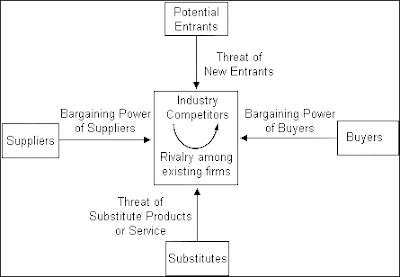
Interessante a associação que fazem do "moat" de um negócio, definição dada pelo Warren Buffett a uma empresa que possui nítidas vantagens competitivas no seu mercado impedindo o acesso de potenciais concorrentes, e as "5 forças" que Michael Porter utiliza para avaliar o posicionamento da empresa relativamente aos seus clientes, fornecedores, competidores actuais, potenciais competidores e produtos substitutos. Os dois conceitos são bastante semelhantes e permitem determinar a previsibilidade dos resultados do negócio.
Parte 1 Parte 2 Parte 3 Parte 4 Parte 5 Parte 6
in Motley Fool http://www.fool.com/
Interessante a associação que fazem do "moat" de um negócio, definição dada pelo Warren Buffett a uma empresa que possui nítidas vantagens competitivas no seu mercado impedindo o acesso de potenciais concorrentes, e as "5 forças" que Michael Porter utiliza para avaliar o posicionamento da empresa relativamente aos seus clientes, fornecedores, competidores actuais, potenciais competidores e produtos substitutos. Os dois conceitos são bastante semelhantes e permitem determinar a previsibilidade dos resultados do negócio.
Parte 1 Parte 2 Parte 3 Parte 4 Parte 5 Parte 6
in Motley Fool http://www.fool.com/

quinta-feira, maio 03, 2007
Inside Buffett's Investing Strategy
Inside Buffett's Investing Strategy
Some of the key tenets of the Oracle of Omaha's philosophy.
By Paul A. Larson 05-02-07 06:00 AM
"In our view … investment students need only two well-taught courses--How to Value a Business, and How to Think About Market Prices." Warren Buffett, whose Berkshire Hathaway (BRK.B) holding company is convening its annual shareholders meeting May 5, is widely regarded as the world's most successful investor, and it is no mistake we at Morningstar have repeatedly echoed his wisdom. The book value of Berkshire compounded at 21.4% per year between 1965 and 2006. That is more than double the 10.4% pretax return to the S&P 500 over the same period. According to Forbes, Buffett is the world's second-richest man with a net worth of about $52 billion as of March 2007. But he didn't stumble across a giant oil field, develop software, or inherit wealth. Rather, he built his fortune solely through astute investing. Aspiring investors, then, will certainly benefit by studying his methods. Fortunately, Buffett has been forthcoming in Berkshire's annual reports and shareholders meetings. (Click here to watch our Berkshire Hathaway Annual Meeting Preview video. And for on-the-spot coverage of this year's meeting, be sure to visit Morningstar.com on May 5 to read our analyst blog on the event.)
In Berkshire's 1977 annual report, Buffett described the central principles of his investment strategy:
"We select our marketable equity securities in much the way we would evaluate a business for acquisition in its entirety. We want the business to be one (a) that we can understand; (b) with favorable long-term prospects; (c) operated by honest and competent people; and (d) available at a very attractive price."
in Morningstar http://news.morningstar.com/article/article.asp?id=191671&pgid=wwhome1a
Some of the key tenets of the Oracle of Omaha's philosophy.
By Paul A. Larson 05-02-07 06:00 AM
"In our view … investment students need only two well-taught courses--How to Value a Business, and How to Think About Market Prices." Warren Buffett, whose Berkshire Hathaway (BRK.B) holding company is convening its annual shareholders meeting May 5, is widely regarded as the world's most successful investor, and it is no mistake we at Morningstar have repeatedly echoed his wisdom. The book value of Berkshire compounded at 21.4% per year between 1965 and 2006. That is more than double the 10.4% pretax return to the S&P 500 over the same period. According to Forbes, Buffett is the world's second-richest man with a net worth of about $52 billion as of March 2007. But he didn't stumble across a giant oil field, develop software, or inherit wealth. Rather, he built his fortune solely through astute investing. Aspiring investors, then, will certainly benefit by studying his methods. Fortunately, Buffett has been forthcoming in Berkshire's annual reports and shareholders meetings. (Click here to watch our Berkshire Hathaway Annual Meeting Preview video. And for on-the-spot coverage of this year's meeting, be sure to visit Morningstar.com on May 5 to read our analyst blog on the event.)
In Berkshire's 1977 annual report, Buffett described the central principles of his investment strategy:
"We select our marketable equity securities in much the way we would evaluate a business for acquisition in its entirety. We want the business to be one (a) that we can understand; (b) with favorable long-term prospects; (c) operated by honest and competent people; and (d) available at a very attractive price."
in Morningstar http://news.morningstar.com/article/article.asp?id=191671&pgid=wwhome1a
quarta-feira, abril 25, 2007
A Maestro of Investments in the Style of Buffett
By GERALDINE FABRIKANT
Published: April 23, 2007
CHICAGO — Warren E. Buffett is hardly a man of mystery.
But when investors gather in Omaha in two weeks for the Berkshire Hathaway annual meeting, there will be a nagging question mark over the head of the 76-year-old chairman: who might someday replace him in each of the two roles he plays — chief executive of Berkshire Hathaway, and its chief investment officer?
A bit more is known about the choice of a future chief executive. Mr. Buffett has said there are three candidates from various Berkshire-owned companies. Buffett watchers speculate that the list includes David L. Sokol of MidAmerican Energy Holdings; Ajit Jain, head of the reinsurance division of Berkshire’s National Indemnity Company; Tony Nicely, chief executive of Geico; Joseph P. Brandon, chairman of General Re; and Richard T. Santulli, founder of NetJets.
The bigger mystery is who will become the chief investment officer. Mr. Buffett says he does not know himself. On this point of succession, “frankly, we are not as well prepared,” he wrote in his 2006 shareholder letter last month.
Here is a clue, though. He or she will probably be a lot like Louis Simpson.
... http://www.nytimes.com/2007/04/23/business/23simpson.html?_r=3&pagewanted=1&ref=business&oref=slogin
Published: April 23, 2007
CHICAGO — Warren E. Buffett is hardly a man of mystery.
But when investors gather in Omaha in two weeks for the Berkshire Hathaway annual meeting, there will be a nagging question mark over the head of the 76-year-old chairman: who might someday replace him in each of the two roles he plays — chief executive of Berkshire Hathaway, and its chief investment officer?
A bit more is known about the choice of a future chief executive. Mr. Buffett has said there are three candidates from various Berkshire-owned companies. Buffett watchers speculate that the list includes David L. Sokol of MidAmerican Energy Holdings; Ajit Jain, head of the reinsurance division of Berkshire’s National Indemnity Company; Tony Nicely, chief executive of Geico; Joseph P. Brandon, chairman of General Re; and Richard T. Santulli, founder of NetJets.
The bigger mystery is who will become the chief investment officer. Mr. Buffett says he does not know himself. On this point of succession, “frankly, we are not as well prepared,” he wrote in his 2006 shareholder letter last month.
Here is a clue, though. He or she will probably be a lot like Louis Simpson.
... http://www.nytimes.com/2007/04/23/business/23simpson.html?_r=3&pagewanted=1&ref=business&oref=slogin
Subscrever:
Mensagens (Atom)